Ground Prepared for What Comes Next
Excavation in Jefferson for foundations, utility lines, and drainage that demand precise depth and stable soil
Northeast Georgia properties rest on soil that shifts between red clay, rocky outcrops, and layers that drain differently depending on elevation and previous land use. Johnson Land Service handles excavation across Jefferson for residential foundations, utility trenches, drainage improvements, and site development, using equipment sized to match terrain that ranges from gentle slopes to steep hillsides. Proper excavation depth and wall stability determine whether a foundation settles evenly or a drainage line functions as intended for decades.
Excavation removes soil to specified dimensions, exposes underlying conditions that affect structural decisions, and creates space for utilities, footings, or water management systems. Projects include digging foundation perimeters that match engineered plans, trenching for septic lines or electrical conduit at depths that meet code and avoid frost heave, and reshaping drainage paths to redirect water away from structures. Each cut reveals soil composition, which dictates whether additional base material or compaction is needed before construction continues.
Schedule an excavation assessment to review site conditions and define depth requirements for your project.
What Proper Excavation Requires
Excavation begins with marking utility locations and setting grade stakes that define cut depth, followed by removing soil in lifts that prevent wall collapse and allow inspection of subsurface layers. Equipment selection depends on access width, soil type, and whether the site includes roots, boulders, or buried debris that slower hand methods would struggle to clear. Operators adjust bucket angles and cutting pressure to avoid over-excavation that weakens bearing capacity or under-cutting that leaves high spots beneath poured concrete.
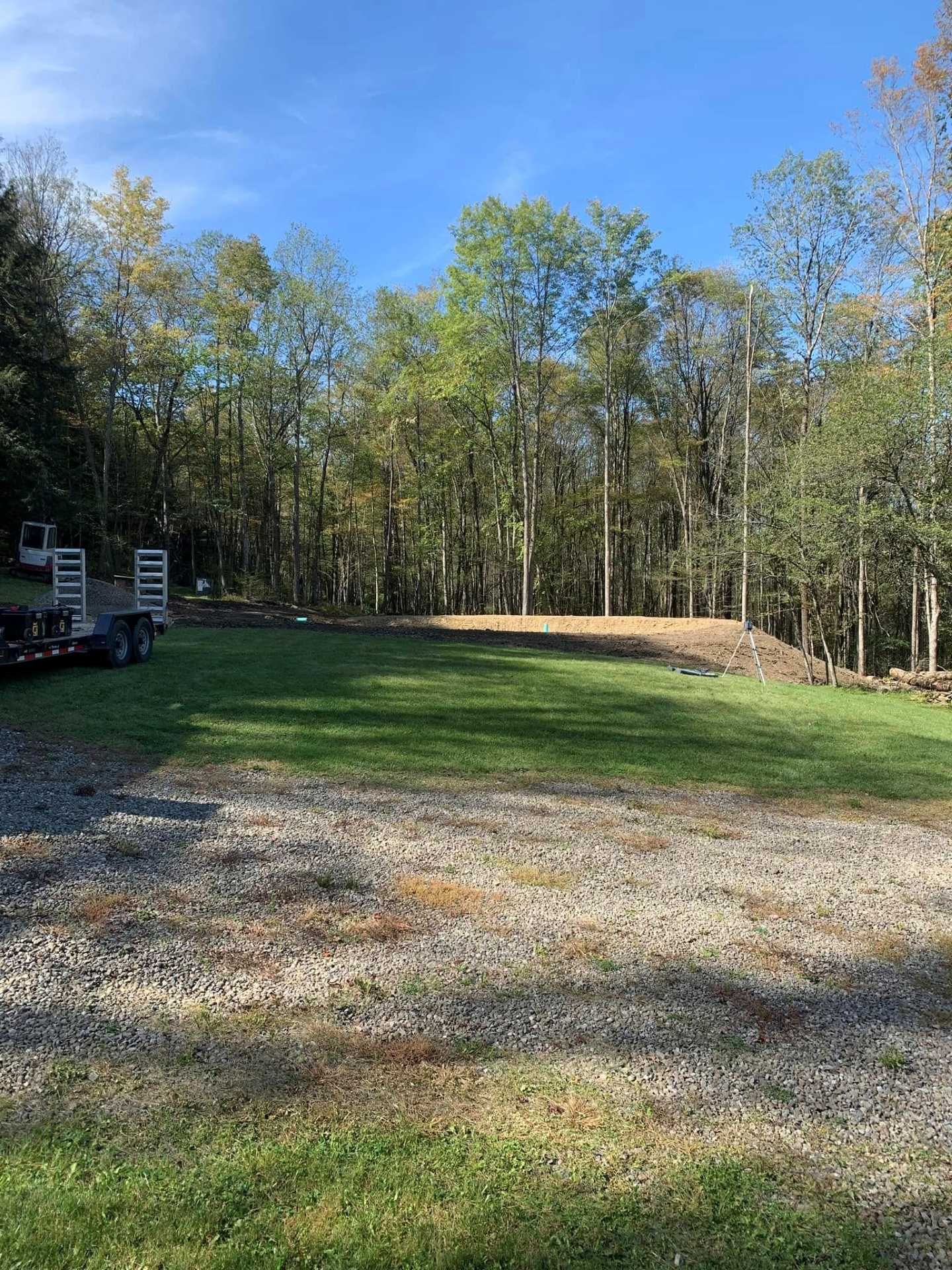
After excavation, you see level trenches with clean walls, exposed rock or clay that indicates stable bearing material, and stockpiled topsoil separated for later backfill or landscaping use. Foundation excavations reveal whether bedrock sits close to the surface or whether additional depth is needed to reach undisturbed soil. Drainage trenches slope consistently toward outlets, eliminating low spots where water would pool instead of flowing away from the property.
Excavation scope includes hauling excess material off-site when backfill volume exceeds what the project requires, compacting trench bottoms before pipe installation, and coordinating timing with concrete contractors or utility crews whose schedules depend on prepared ground. Weather affects clay workability—wet conditions turn it into mud that clings to equipment, while dry spells harden it into material that resists cutting.
What Property Owners Ask Before Excavation Starts
What happens if excavation reveals unexpected rock or groundwater?
Excavation may expose bedrock that requires specialized breaking equipment or water seepage that needs temporary pumping and adjusted drainage plans before work continues. Site evaluation reduces surprises, but subsurface conditions remain uncertain until digging begins.
How is excavated soil managed during the project?
Topsoil is separated and stockpiled for reuse in landscaping or backfill, while excess subsoil is either spread across the property to adjust grade or hauled away if the site lacks space for additional material. Clay subsoil compacts well for structural fill but does not support plant growth.
Why does excavation depth matter for foundation stability?
Foundations must rest on undisturbed soil or properly compacted fill that supports weight without settling unevenly, which means cutting to depths where soil density and moisture content remain stable across seasons. Shallow excavation risks placing footings on loose topsoil that compresses under load.
When should excavation be scheduled relative to other site work?
Excavation follows land clearing and precedes concrete pours, utility installations, or grading work that depends on defined elevations, so coordinating schedules prevents delays when one phase cannot start until excavated areas are inspected and approved.
What site access does excavation equipment require?
Excavators and dump trucks need pathways wide enough to maneuver without damaging neighboring structures or landscaping, plus stable ground that supports heavy machinery during wet conditions common in Northeast Georgia. Narrow lots may require smaller equipment that works more slowly but fits constrained spaces.
Johnson Land Service adapts excavation methods to match the soil layers and drainage patterns found across Jefferson properties. Request an on-site consultation to review excavation depth and site access for your project.
Excavation projects in Jefferson vary with soil composition, site access, and the depth required for foundations or utilities, so understanding what each phase involves helps property owners plan around construction timelines and site conditions.