Driveways That Handle Weather and Weight
Gravel Driveway Installation & Repair in Jefferson for Rural Properties Where Washouts, Potholes, and Poor Drainage Make Access Unreliable
Driveways develop potholes, ruts, and drainage channels when the base layer fails or when gravel washes away during storms, leaving access routes that damage vehicles and become impassable during wet weather. Johnson Land Service installs and repairs gravel driveways across Jefferson for residential, agricultural, and rural properties where reliable access matters for daily use, equipment hauling, and emergency vehicle entry. Proper construction involves more than spreading stone—it requires base preparation, grading for water flow, and material selection that matches traffic patterns and soil conditions.
Installation begins with excavating soft or unstable soil, establishing a compacted base layer, and shaping the driveway profile so water runs off rather than pooling. Gravel size and type are selected based on whether the driveway serves light vehicles, heavy trucks, or agricultural equipment. Repair work addresses washouts by regrading problem sections, adding base material where settling has occurred, and resurfacing with angular stone that locks together under load rather than displacing.
Schedule a driveway evaluation to identify base problems, drainage issues, and material deficiencies affecting your current access route.
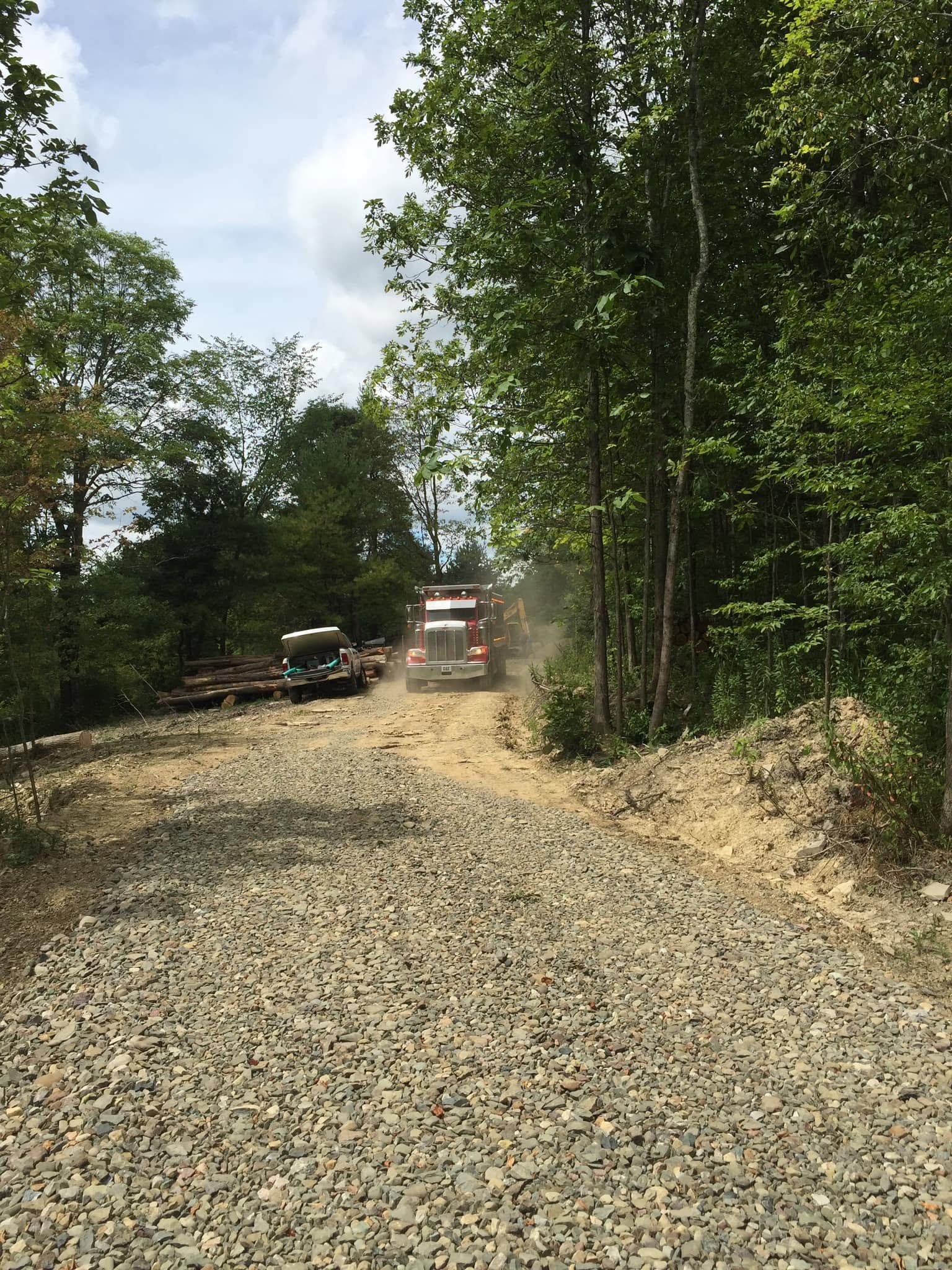
How Driveway Construction Prevents Long-Term Failure
Durable driveways require a stable base—typically crushed stone or compacted aggregate—that distributes weight and prevents the surface layer from sinking into soft soil below. The driveway is crowned or sloped to direct runoff toward edges, and culverts or drainage swales are installed where water naturally crosses the route. Surface gravel consists of angular stone rather than round river rock, because angular edges interlock and resist displacement under turning tires and braking forces.
After installation or repair, you'll notice firm traction without the sinking or rutting common on poorly constructed drives, water that sheds to the sides rather than pooling in the wheel tracks, and a surface that stays navigable through rain events typical in Jefferson. The driveway maintains its profile and drainage characteristics under regular use instead of developing the washouts and potholes that require constant maintenance. Properly graded and based driveways handle years of traffic without structural failure or recurring repair needs.
Driveway projects vary based on length, soil conditions, and existing damage severity. Some properties require full reconstruction with base replacement, while others need only surface regrading and fresh stone. The thickness of base and surface layers is adjusted for anticipated loads—residential driveways handling passenger vehicles need less depth than agricultural routes supporting loaded trucks and tractors. Material selection also considers local availability and how well specific stone types perform in Georgia's clay soils and rainfall patterns.
Questions Property Owners Have About Gravel Driveways
What causes gravel driveways to develop potholes and ruts?
Inadequate base preparation, poor drainage design, or using rounded gravel that doesn't interlock all contribute to surface failure. Without proper compaction and grading, the driveway settles unevenly and channels form where water flows.
How is the base layer prepared during new installation?
Soft soil is excavated and replaced with crushed aggregate compacted in layers, creating a stable platform that won't shift under load. Base depth depends on soil type and expected traffic, typically ranging from four to eight inches for most residential and agricultural driveways.
Why does gravel wash away during heavy rain in Jefferson?
Driveways without proper crown or slope allow water to run down the surface rather than off to the sides, carrying gravel with it. Installing cross-slope and ensuring adequate drainage structures prevents this erosion pattern.
When should a driveway be repaired versus fully reconstructed?
Surface regrading and fresh stone work when the base is still intact but the top layer has displaced. Full reconstruction is needed when the base has failed, soft spots have developed, or drainage problems cause repeated washouts.
What type of gravel works best for driveways?
Angular crushed stone in graduated sizes—often referred to as crusher run or dense grade aggregate—compacts well and resists displacement better than rounded pea gravel or uniform-size stone.
Johnson Land Service builds and repairs driveways using proper base techniques and grading methods that prevent recurring problems. Contact us to arrange an on-site assessment of your driveway's current condition and determine what's needed to create reliable, long-lasting access.
Rural property owners throughout the Jefferson area often ask about driveway construction and repair before committing to projects.