Surfaces Shaped for Function and Flow
Land Grading in Jefferson for building pads, driveways, and yards where uneven terrain causes water pooling and erosion
Uneven terrain that traps water in low spots, channels runoff toward foundations, or leaves driveways too steep for safe vehicle access limits how properties function and accelerates soil erosion during storms. Johnson Land Service provides land grading across Jefferson to reshape building pads, driveways, yards, and large rural properties into smooth, sloped surfaces that direct water away from structures and improve usability. Red clay soils common in Northeast Georgia compact well when properly graded but erode quickly when slopes exceed stable angles or drainage paths concentrate flow into unprotected channels. Grading creates surfaces ready for construction, landscaping, or agricultural use by eliminating high spots, filling depressions, and establishing consistent drainage gradients.
Grading adjusts surface elevations using equipment that cuts high areas and spreads material into low spots, compacting each layer to prevent future settling. Projects include leveling building pads so foundations sit on uniform surfaces, sloping yards away from homes to prevent basement seepage, shaping driveways to reduce steep sections that become impassable when wet, and contouring pastures to eliminate standing water that harms livestock footing and grass growth. Precision grading requires setting grade stakes at specified elevations and checking results with laser levels or GPS-guided equipment that maintains accuracy within inches across large areas.
Request grading services to evaluate drainage patterns and surface conditions on your property.
What Changes After Land Grading Completes
Grading begins with surveying to establish existing elevations and calculate cut-and-fill volumes, then removing topsoil from areas where subsoil will be reworked and stockpiling it for final spreading once grading reaches target elevations. Equipment moves soil in passes, creating slopes that drain toward designated outlets while avoiding angles so steep that erosion starts before vegetation establishes. Compaction follows grading to increase soil density and reduce future settling, especially in filled areas where loose material would compress under traffic or structural loads.
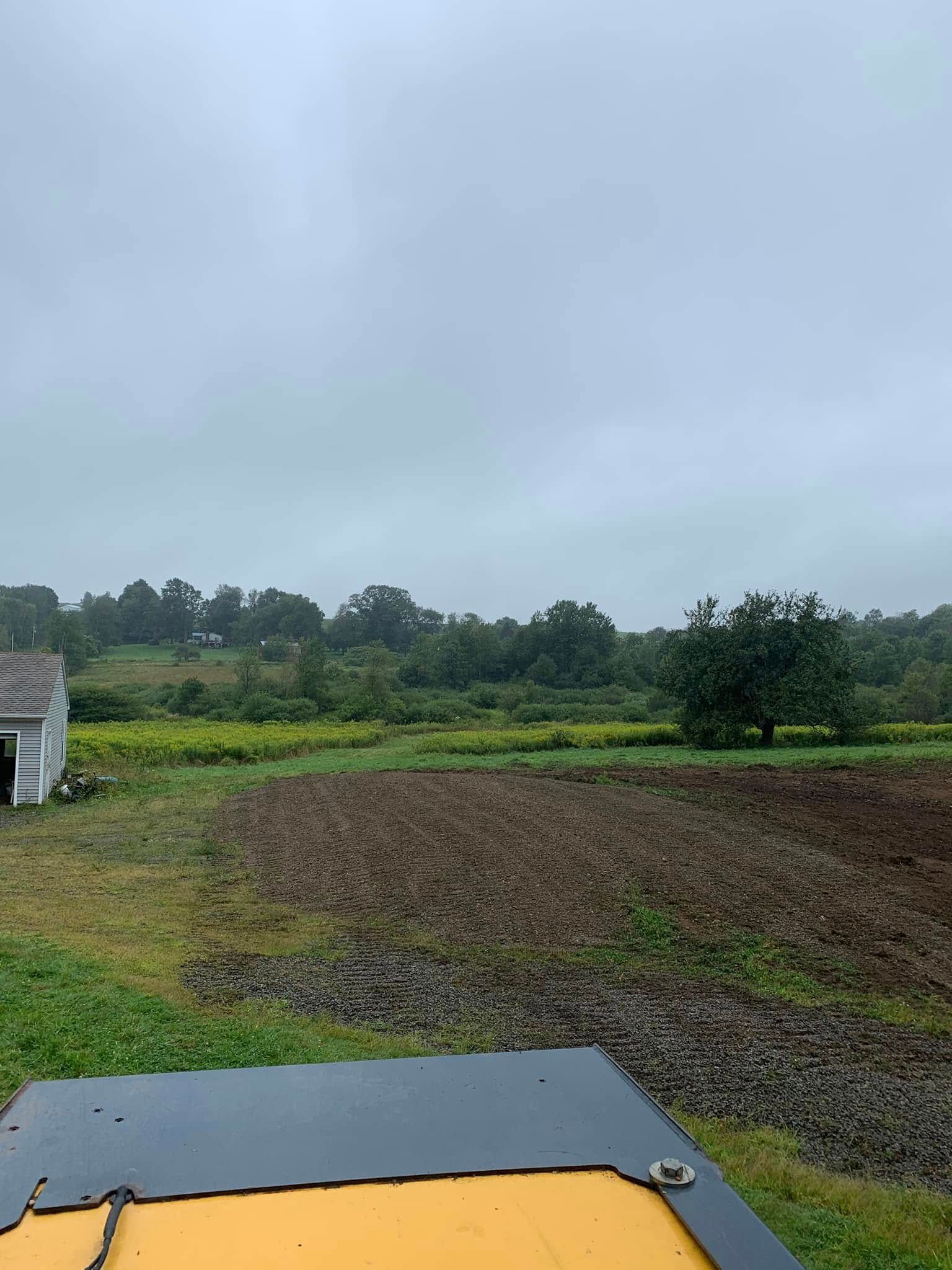
After grading finishes, you see smooth surfaces free of ruts and depressions, slopes that visibly guide water toward drainage swales or ditches rather than pooling against structures, and driveways with grades gentle enough for safe vehicle maneuvering. Yards drain consistently without leaving muddy areas that remain soggy days after rain stops. Building pads sit level and ready for foundation work, and pastures shed water evenly without eroding topsoil into gullies. Properly graded surfaces reduce maintenance by preventing erosion that would require repeated repairs and regrading.
Grading projects throughout Jefferson address terrain common to Northeast Georgia, where rolling topography and clay soils demand careful attention to slope angles and compaction. Work includes reshaping land for new construction, correcting drainage problems around existing structures, and preparing sites for landscaping or agricultural improvements. Grading precision affects whether water moves as intended, whether surfaces remain stable under use, and how quickly vegetation establishes after final grading completes.
What Homeowners Ask About Grading Work
What slope angles prevent erosion while ensuring proper drainage?
Slopes between two and four percent move water effectively without creating flow velocities that erode bare soil, while steeper grades require erosion control measures like sod, riprap, or terracing to stabilize surfaces until vegetation establishes. Flat areas with less than one percent slope may need subsurface drains to prevent standing water.
How does grading correct existing drainage problems near structures?
Grading reshapes ground to slope away from foundations, intercepts water before it reaches problem areas, and directs runoff toward swales or drainage inlets that carry it off the property. Johnson Land Service adjusts elevations around homes and outbuildings to eliminate low spots where water previously pooled against walls or seeped into basements.
Why is topsoil removed before grading and replaced afterward?
Topsoil contains organic material that compresses under loads and prevents stable compaction, so it is stripped before grading subsoil to final elevations, then spread back as a planting layer once grading completes. This preserves topsoil for landscaping while ensuring underlying grades remain stable.
When should grading happen relative to other property improvements?
Grading follows clearing and excavation but precedes landscaping, paving, or seeding, since reshaping surfaces disrupts existing plantings and requires bare soil for equipment access. Coordinating grading with construction schedules prevents finished work from being damaged by equipment moving material across the site.
What equipment precision does grading require for construction-ready surfaces?
Building pads and driveways need elevations accurate within inches to match engineering plans and ensure proper drainage, which requires laser-guided or GPS-equipped grading equipment that maintains consistent slopes across large areas without creating dips or humps that trap water or cause structural problems.
Johnson Land Service uses precision equipment and experience working with Northeast Georgia terrain to create smooth, functional surfaces ready for construction or landscaping. Call (814) 516-6994 to discuss grading solutions for your property.
Land grading projects vary with soil type, drainage goals, and site conditions, so understanding what the process involves helps property owners plan for realistic outcomes and coordinate grading with other site improvements.