Water Features That Serve Multiple Purposes
Pond Installation in Jefferson for livestock access, fishing opportunities, and property aesthetics that require stable banks and controlled water levels
A pond that holds water year-round without excessive seepage depends on finding clay layers dense enough to seal the basin, positioning the dam where natural topography minimizes earthwork, and sizing the watershed so rainfall fills the pond without overtopping the spillway during storms. Johnson Land Service creates ponds across Jefferson for recreational use, agricultural livestock watering, and property enhancement, working with terrain that includes rolling pastures, wooded hollows, and ridgelines where spring flow and rainfall runoff vary by season. Site evaluation determines whether existing soil will hold water or whether imported clay is needed to line the basin and prevent chronic leaks.
Pond installation involves excavating the basin to depth, constructing an earthen dam with compacted fill, installing overflow structures that handle excess water, and shaping side slopes that resist erosion as water levels fluctuate. Placement affects how much watershed drains into the pond, whether the dam intercepts natural springs, and how sunlight exposure influences water temperature and vegetation growth. Ponds positioned in low areas collect more runoff but may require larger spillways to handle storm surges without breaching the dam.
Arrange a pond installation consultation to evaluate drainage patterns and soil conditions on your property.
How Pond Construction Addresses Site-Specific Conditions
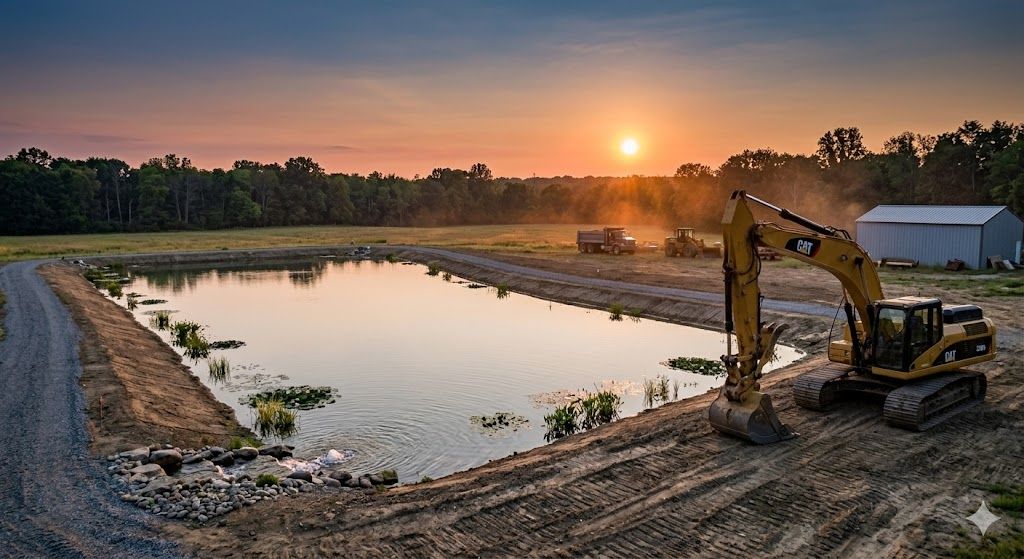
Construction starts with stripping topsoil from the dam footprint and basin floor, then excavating to planned depth while testing subsurface layers for clay content that indicates natural sealing ability. Dam construction proceeds in lifts, with each clay layer compacted using heavy equipment to eliminate air pockets that would allow seepage through the embankment. The spillway is positioned at one end of the dam and armored with stone or pipe to prevent erosion when water overtops during heavy rain.
Once construction finishes, you see a pond that fills gradually as springs emerge and rainfall accumulates, banks that slope gently enough for livestock access or steep enough to discourage weed growth depending on intended use, and a spillway that channels overflow without cutting into the dam. Water clarity improves as suspended soil settles, and the basin holds depth sufficient for fish habitat or irrigation pumping. Properly compacted dams remain stable even when water levels drop during dry periods, avoiding cracks that would require costly repairs.
Pond design accounts for whether you plan to stock fish, provide livestock watering points, or maintain aesthetic views from nearby structures. Depth must exceed summer evaporation losses and winter ice thickness to sustain aquatic life. Watershed size determines how quickly the pond refills after irrigation withdrawals or drought drawdowns, and whether sediment inflow will require periodic dredging to maintain capacity.
Answers to Common Pond Installation Questions
What site conditions work best for pond construction?
Effective pond sites include low areas where natural drainage converges, clay-rich soil that seals the basin without imported material, and enough slope to create a dam without excessive earthwork. Steep hollows allow deeper ponds with smaller dam footprints, while flat areas require longer, lower dams to impound the same water volume.
How does soil type affect whether a pond holds water?
Clay particles compact into a dense barrier that blocks water movement, while sandy or rocky soil allows seepage that prevents the pond from filling or maintaining consistent levels. Johnson Land Service tests soil during site evaluation to determine whether natural clay is sufficient or whether lining the basin with compacted clay becomes necessary.
Why does spillway design matter for long-term pond stability?
Spillways prevent water from overtopping the dam and eroding the embankment during storms, directing overflow into a stabilized channel that handles peak flow without cutting into compacted fill. Undersized spillways risk dam failure when large rainfall events exceed capacity.
When should a pond be excavated to minimize weather delays?
Construction proceeds most efficiently during dry months when soil is workable and equipment can access the site without rutting, though Northeast Georgia weather patterns mean flexible scheduling accommodates unexpected rain that softens clay and delays compaction work.
What maintenance does a pond require after installation?
Ponds need periodic mowing of dam faces to prevent woody vegetation from rooting through the embankment, inspection of spillways for debris blockage or erosion, and eventual sediment removal if the watershed delivers soil that gradually reduces basin depth and storage capacity.
Johnson Land Service tailors pond construction to match the drainage and soil conditions found across Northeast Georgia properties. Contact us to schedule a site evaluation and discuss pond placement options for your land.
Pond projects in Jefferson depend on soil composition, watershed characteristics, and intended use, so understanding construction phases and site requirements helps property owners plan for realistic timelines and ongoing maintenance.